Wild Will Brings Macbeth to Millbay Academy
From uncertainty to engagement
I’ll admit, when I first arranged for Wild Will—a theatre company more used to performing Macbeth in the gardens of stately homes—to spend a full day with our Year 11 students, I wondered how it would land.
Our context is different. Our students are brilliantly diverse, multilingual, and often navigating far more than just an English Literature GCSE. For many, English is an additional language. Shakespeare can, at first glance, feel distant—something to be decoded rather than experienced.
By the end of the morning, that distance had already begun to close.
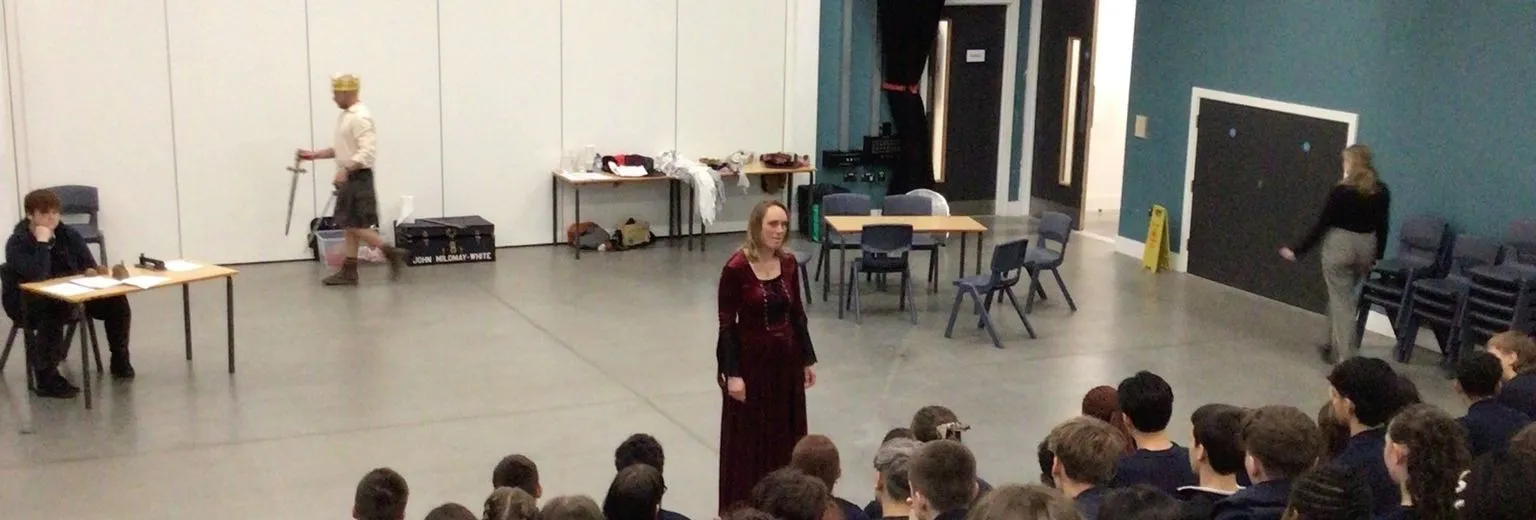
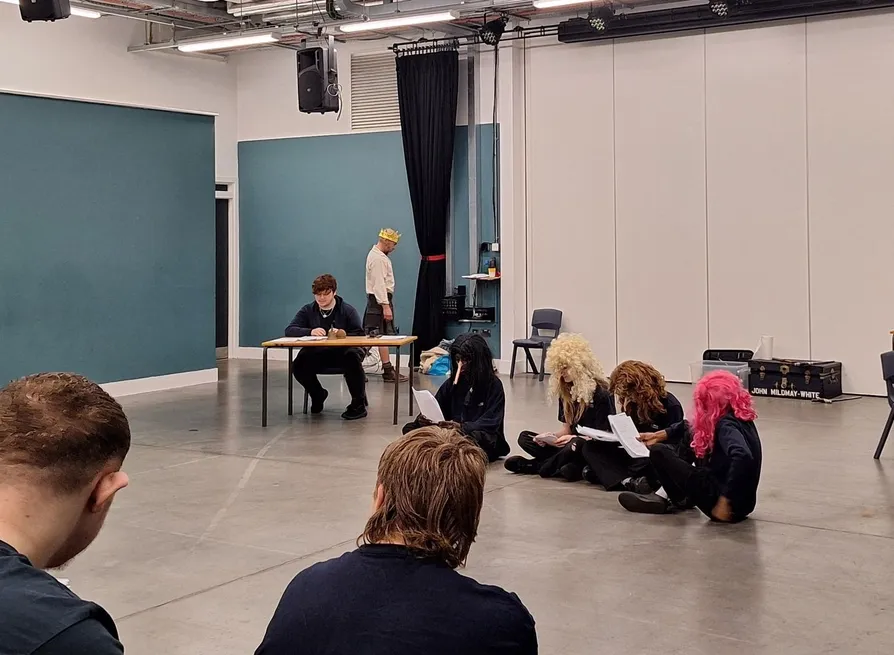
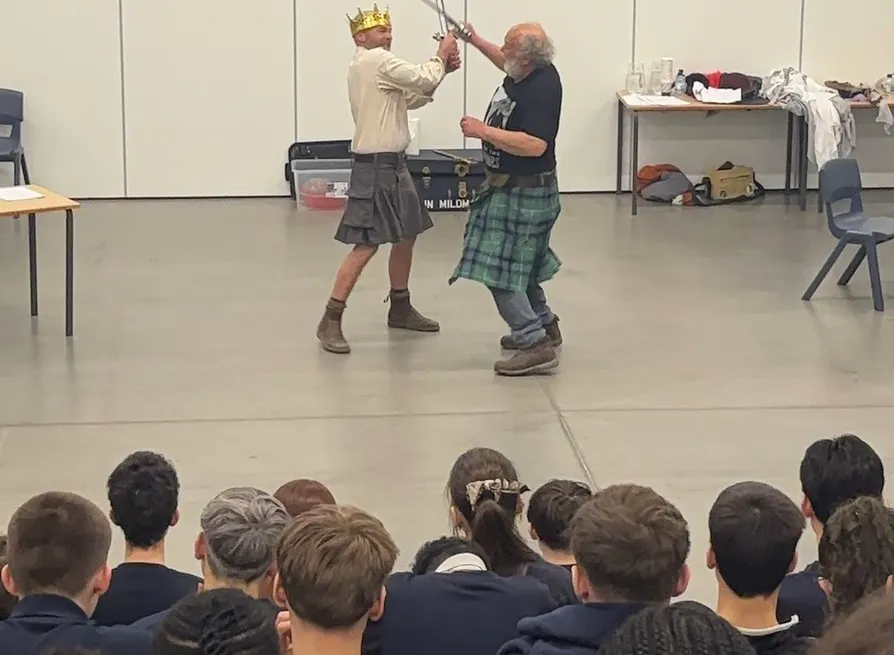
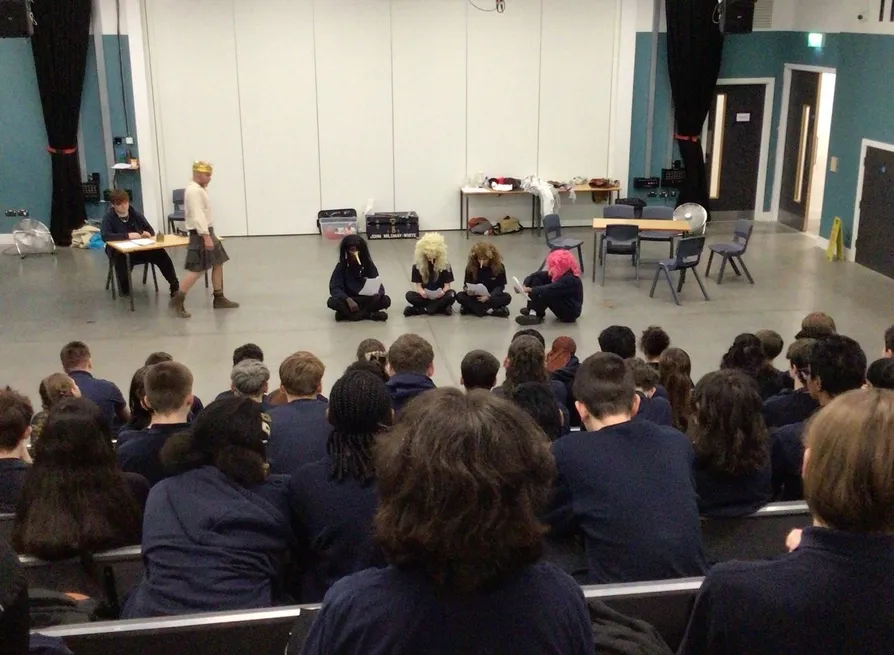
The company approached the text with both seriousness and playfulness. A performance of key scenes by the exceptionally skilled Jack and Zoe brought a new clarity and energy to the text, holding students’ attention in a way that felt both immediate and accessible. With careful, insightful direction from the company’s director, Rob—who also took on the role of Banquo—students were guided through the characters’ motivations and the reasoning behind key directorial choices. His narration helped make those decisions feel logical and purposeful, allowing students to see the play not just as a text to study, but as a series of deliberate, meaningful choices. There was participation and laughter—particularly as boys who might usually hold back found themselves in wigs and witches’ noses, committing fully to the drama. The Weird Sisters have rarely been so enthusiastically realised.
And then there was Raynard, whose use of coconuts to create the sound of a galloping horse will stay with me for a long time. It was inventive, slightly chaotic, and completely effective—one of those moments where a room shifts, and everyone is suddenly more willing to join in.

Language, confidence and participation
By the afternoon, something deeper had taken root.
With growing confidence, students began to experiment more boldly with the language. Some chose to speak lines in their first languages—Yoruba, Romanian, Persian and Polish—layering meaning, rhythm and identity into the text in ways that felt both natural and powerful. What might have seemed, at the start of the day, like a barrier became a strength. Shakespeare’s words were not being simplified; they were being expanded, enriched.
Throughout, the balance felt right. There was clear academic purpose—students grappling with character, theme and intention—but also the freedom to explore, to take risks, and to be heard. The work respected both the text and the students in equal measure.
Why this work matters
As Deputy Head and English Lead, I think often about how we ensure every young person has access to powerful knowledge. What I saw throughout the day reinforced something important: high expectations and genuine inclusion go hand in hand. When students feel that they belong in the work, they rise to meet its challenge.
By the end of the day, students weren’t just more confident about Macbeth. They were more confident in themselves—as readers, as thinkers, and, perhaps most importantly, as voices worth hearing.
Wild Will may return to their gardens and their summer audiences.
But here, in our decidedly less manicured setting, they have left behind something of far greater consequence: the conviction that great literature does not belong to a particular place, or a particular kind of person.
That literature belongs here too and that our students belong within it.
Anna Norman
Deputy Headteacher | Millbay Academy