
Exploring Jerusalem through the ticking clock
The play opens with a single word from Fawscett:
Time.
Then Parsons counts it out:
Eight fifty nine and fifty five, fifty six, fifty seven. Nine o'clock.
And just like that, the clock is running. It won't stop.
That's Jerusalem. Jez Butterworth's funny, brutal, utterly alive play builds its whole world on those ticking seconds, and the man at the centre of it, Johnny "Rooster" Byron, has precious few left.
A man who lives outside time.
Rooster doesn't really belong to the present. He exists somewhere between a battered caravan in a Wiltshire wood and a wilder version of England. He runs on tall tales, motorbike stunts, visiting giants, and nights that never quite end. He's the kind of man who makes you believe, just for a moment, that the old stories are true.
But the world won't leave him alone. Kennet & Avon Council have sent an eviction notice. He's got twenty-four hours.
That's the engine of Jerusalem, a single day, a countdown, a man refusing face the next chapter of his life.
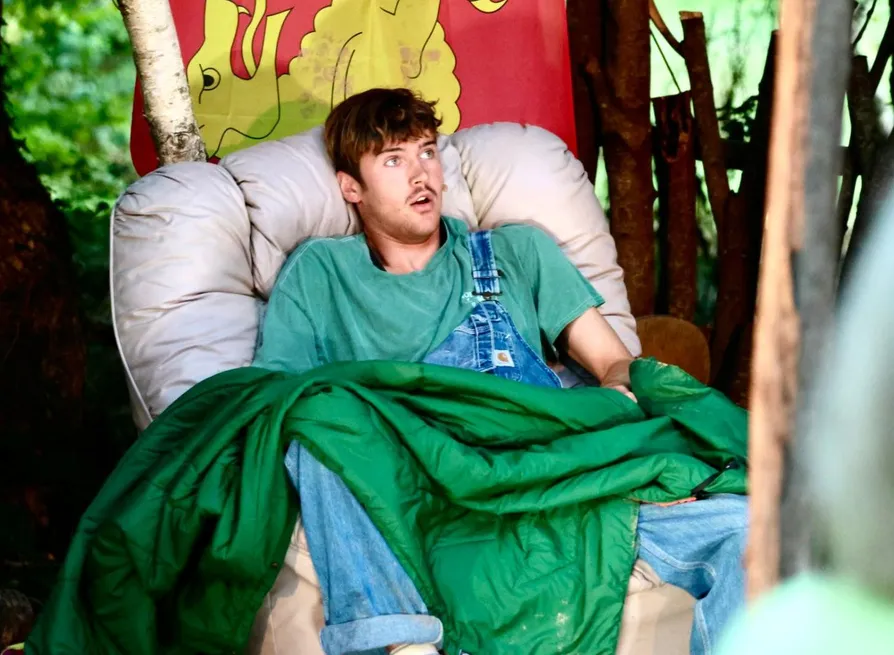
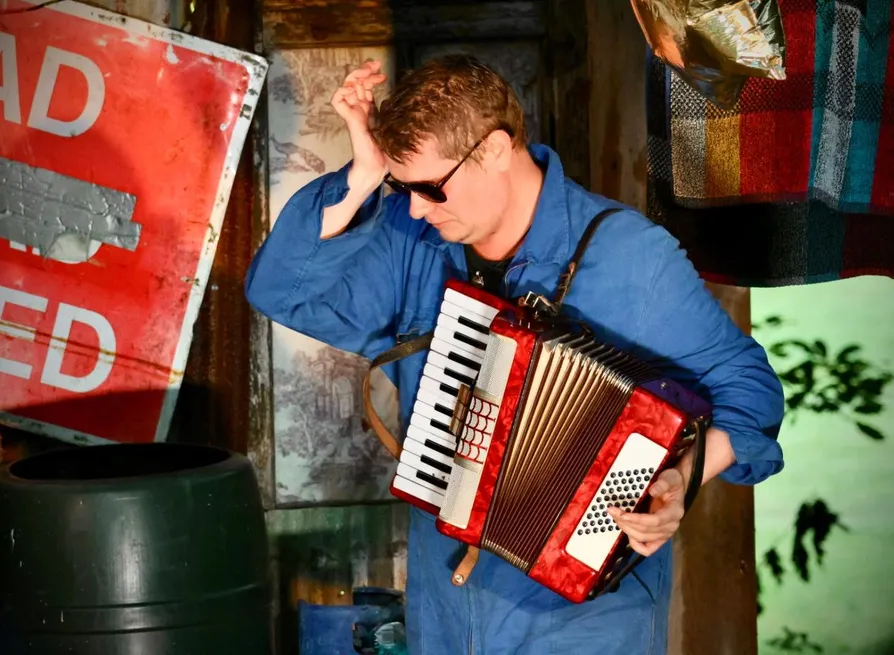
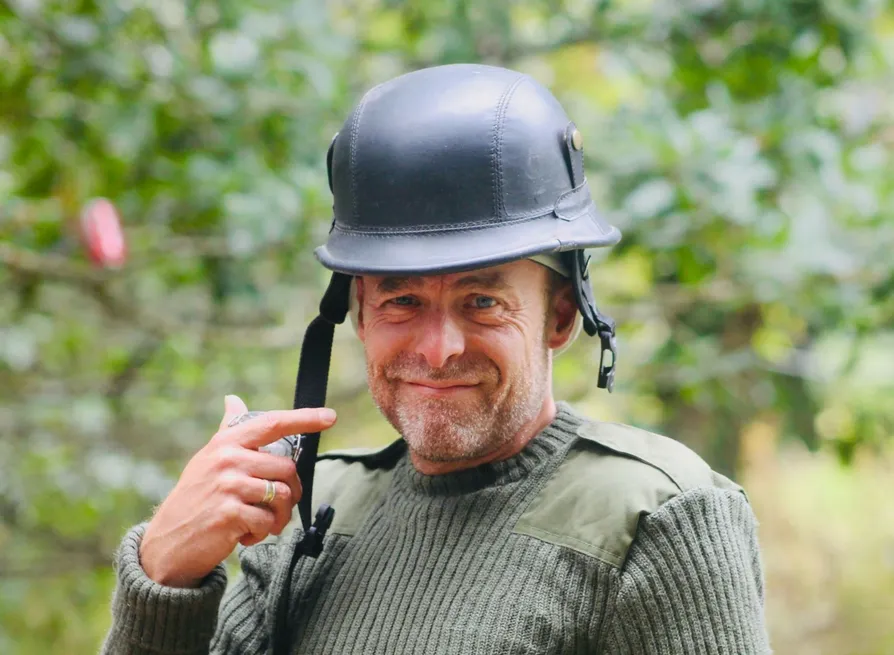
The people who keep time
While Rooster spins his myths, the people around him are quietly watching the clock.
Lee… Dawn… Wesley…they all tell Rooster, in their own way, about the imminant dangers coming...
- Phaedra reading her watch, the last five minutes left of being the Queen of Flintock.
- Dawn pointing at her watchface encanting a warning:
Like a stopped fucking clock. (show him her watch) Wake up. Cos when it gets the there, look at it. Look at it – when it gets to there Johnny…
- Ginger turning up with news no one wants to hear. The Police are on Uphaven Road.
Each arrival, each glance, each small moment of impatience lands with more weight than it should.
Because the thing about Rooster is that he's not just avoiding a council notice. He's avoiding what comes after. The end of something.
What the play is really asking
There's a question underneath all the noise and laughter and chaos: what happens to a man, or a place, or a community, when the stories that used to hold everything together stop being enough?
Rooster's past is enormous. Vivid and ridiculous and real. But the future arriving outside his door is small and official and relentless. The wood where misfits have always found shelter, where the rules of ordinary life go a bit soft at the edges, it's closing in.
He pours another drink. Tells another story. Summons giants.
It's magnificent. And it's heartbreaking.
Why it matters out here, in the woods
There's something particular about watching Jerusalem outdoors, in real woodland, under actual sky, as the light shifts and the trees do whatever trees do around you. Wild Will's version of Jerusalem lives in that space where the environment doesn't just host the story, it becomes part of it. The closing dusk. The rustling. The sense that the world is carrying on regardless.
Time, in the end, is the one thing Rooster can't charm his way out of. It's his real antagonist, not the council, not the neighbours, not any of the figures who drift in and out of his kingdom.
But the author gives time its due. Because when you've only got twenty-four hours, everything in those hours matters more: the friendships, the betrayals, the stories, the laughter. The whole fire of the play comes from that compression.
Jerusalem isn't just about a man being evicted. It's about what a community stands to lose when its wildest, most inconvenient, most alive member is finally forced to go. It's about memory, and stubbornness, and the thin line between legend and delusion.
Rooster lives in his mythology. The village lives in the clock. The space between them, that last day, is where the whole thing burns.